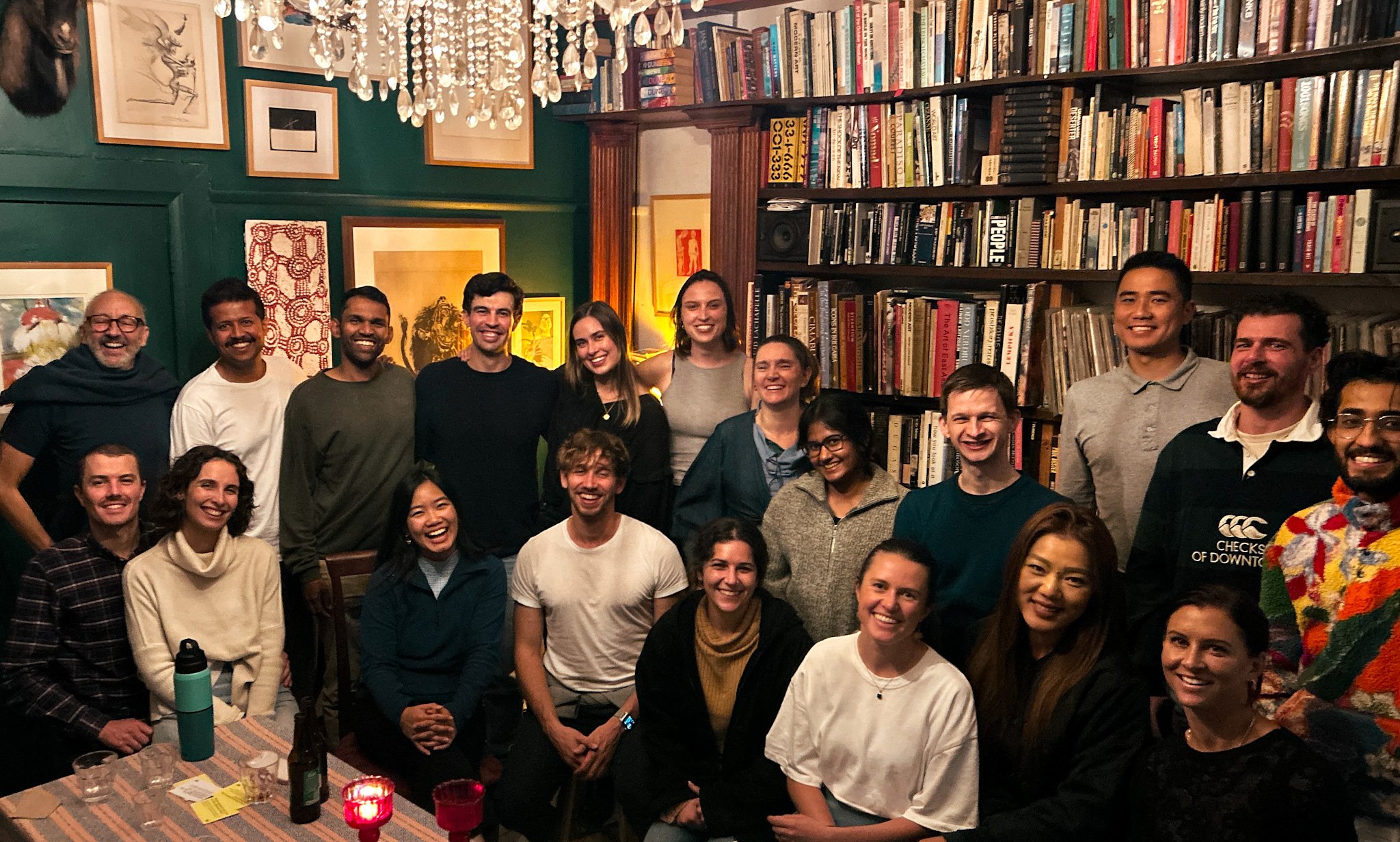
The Chronicles of an Unconventional Cafe
This story was originally published by Humans For Good on 3 June 2025 and has been republished here with their permission because we love stories about great social enterprises. See original post in the Humans for Good substack here.
Introducing Parliament on King
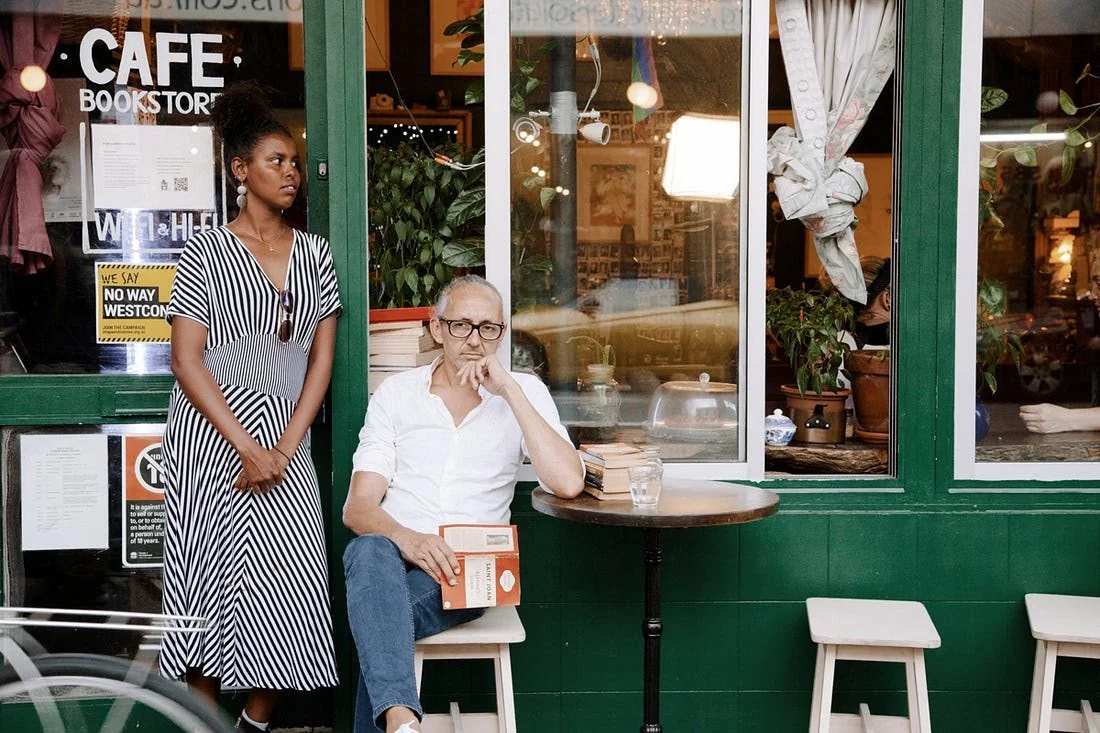
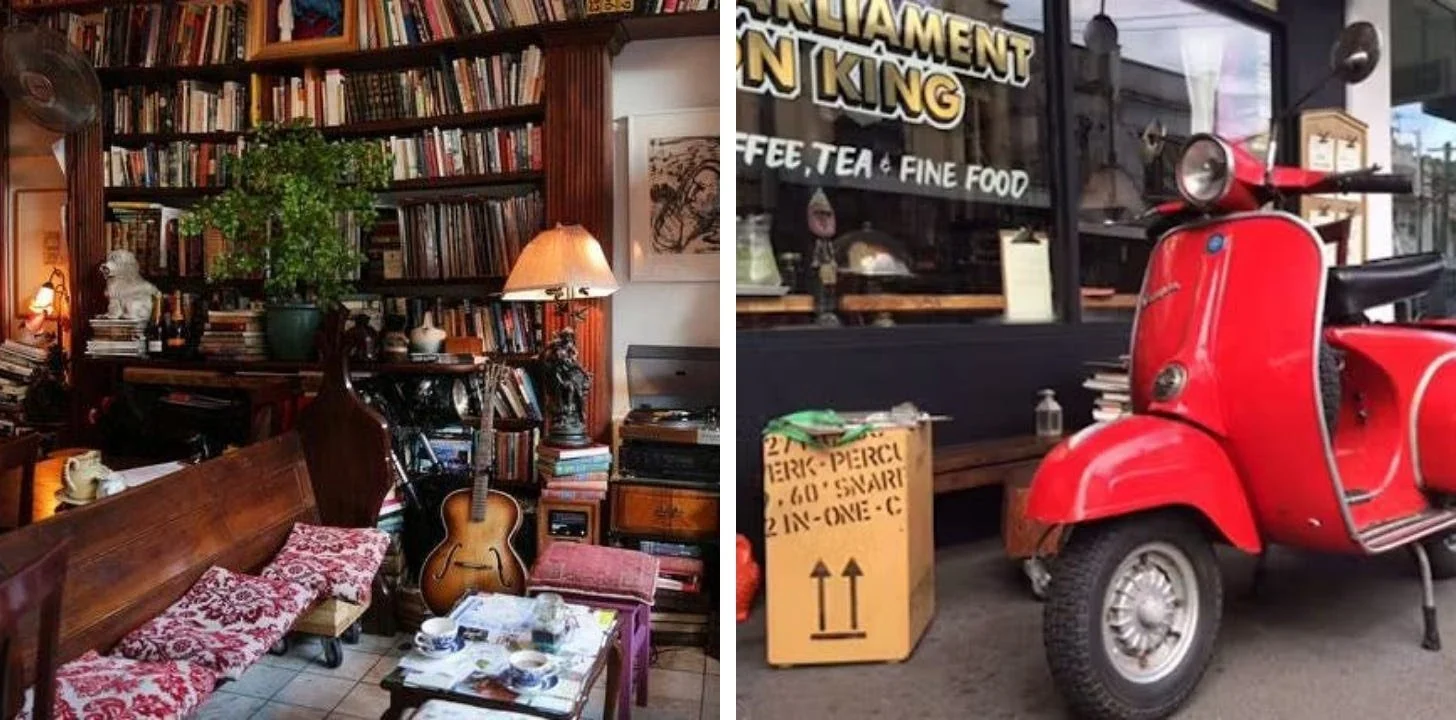
I meet Ravi on a drizzly afternoon. He warmly welcomes me inside Parliament On King which, when free from the gentle bustle of King Street’s patrons – feels just like a cosy living room. Turns out, this is exactly what the space was originally, now covered floor-to-ceiling in books and dotted with sweet trinkets. He sits in front of a cream, slightly rusting Vespa – one of the many relics that has always caught my attention walking past the café. Of course, there’s a story behind it – something I quickly come to realise is true for many of the bits and pieces within the modest space.
When Ravi and his wife were dating, they’d drive round on said Vespa dreamily peering into corner shops in Surry Hills and the Inner West, visualising the day they’d own a bookshop cafe. It would only open on Sundays because they’d be working at their corporate jobs during the week.
“You look in the windows and think, oh, imagine the sweetness of that life and the calmness and the community – the gentleness of it all.”
After 19 years in the advertising world, Ravi found himself questioning his beliefs and priorities. But it wasn’t until a crisis for catharsis occurred when his newborn daughter was hospital-bound, that he and his wife, Della, decided it was time to make the jump.
And jump they did – into a world they knew virtually nothing about, but soon figured out.
"I didn’t know anything about hospitality. I thought I did because I worked in bars and stuff. Before having a cafe, I couldn’t use a coffee machine.”
The origins of their social mission
Ravi told me that he’d been interested in race, race relations and civil society as long as he can remember. Having been born in Adelaide to interracial parents – an Indian father who moved to Australia from Fiji towards the end of the White Australia policy, and a white mother who was arrested protesting the all-white Springbok Rugby Tour in ‘71 – his interest was a consequence of lived experience.
“So when it came to figuring out what to do with our little shop, I knew where I wanted to go. Back then, the discourse around asylum seekers and refugees revealed deeper challenges with race, race relations and civil society in Australia".
Once Ravi had got the hang of keeping the plates spinning in the cafe, he made a visit to the local asylum seeker centre.
After completing a certification in workplace training and education, he put together and pitched a short course to them to send a small cohort of asylum seekers and refugees for training, and employed them in the café.
Over time, Ravi got to know these people’s stories, and soon realised that not only was he working with smart, intelligent, capable humans, but ones that come from rich, deep food culture.
“And here I am showing a qualified eye surgeon from Syria how to make a sandwich. So I decided to flip it around. Let’s do food your way. Tell us what you want to make and how long it takes. We’ll put on dinners for locals to taste your food, connect with each other, share your stories if you wish.
Acknowledging that refugees often arrive to Australia carrying this heavy burden of what they have lost in a bid for a new life, he hoped that these dinners would allow them a chance to reconnect with and share their culture, integrate with community and be treated with respect. The experiment proved a success, and the dinners have become a mainstay in Parliament On King for 11 years, shortly after it opened.
Building a trust-first culture
Parliament On King has a certain air about it, a warm conviviality and a seemingly effortless charm. Staff that you can barely tell are staff because they’re chatting away with customers as if they’re old mates; customers chatting with other customers as if they’re old mates. Maybe it’s the feng shui, or simply how the furniture is imperfectly positioned to subconsciously signal mingling rather than dining.
“In the course of what I do, I meet some of the best people in the world. They were born good. Everyday they get up and they do good things. How did you get to be wonderful?”
With just one person out front servicing customers, Ravi found himself juggling multiple tasks at once. When his hands were occupied making sandwiches, he started directing regulars to the till to pay, asking them to calculate their own bill, place their money in the pot, and take their change. Acknowledging that this short-cut would likely cost him, he checked the pot a couple of weeks later and noticed that, in face, there was more money in there than he expected. And when he started asking all customers to pay themselves too, he noticed the same behaviour.
“What if we set up everything as if everybody was trustable and good? It’s worth that small risk of loss to enjoy your life where everybody is good. How beautiful.”
He references the book Humankind: A Hopeful History by Rutger Bregman, which argues that humans are fundamentally kind and co-operative, and that embracing this view can lead to a better society.
Trust is not naive – it can be transformational.
Community-fuelled resilience
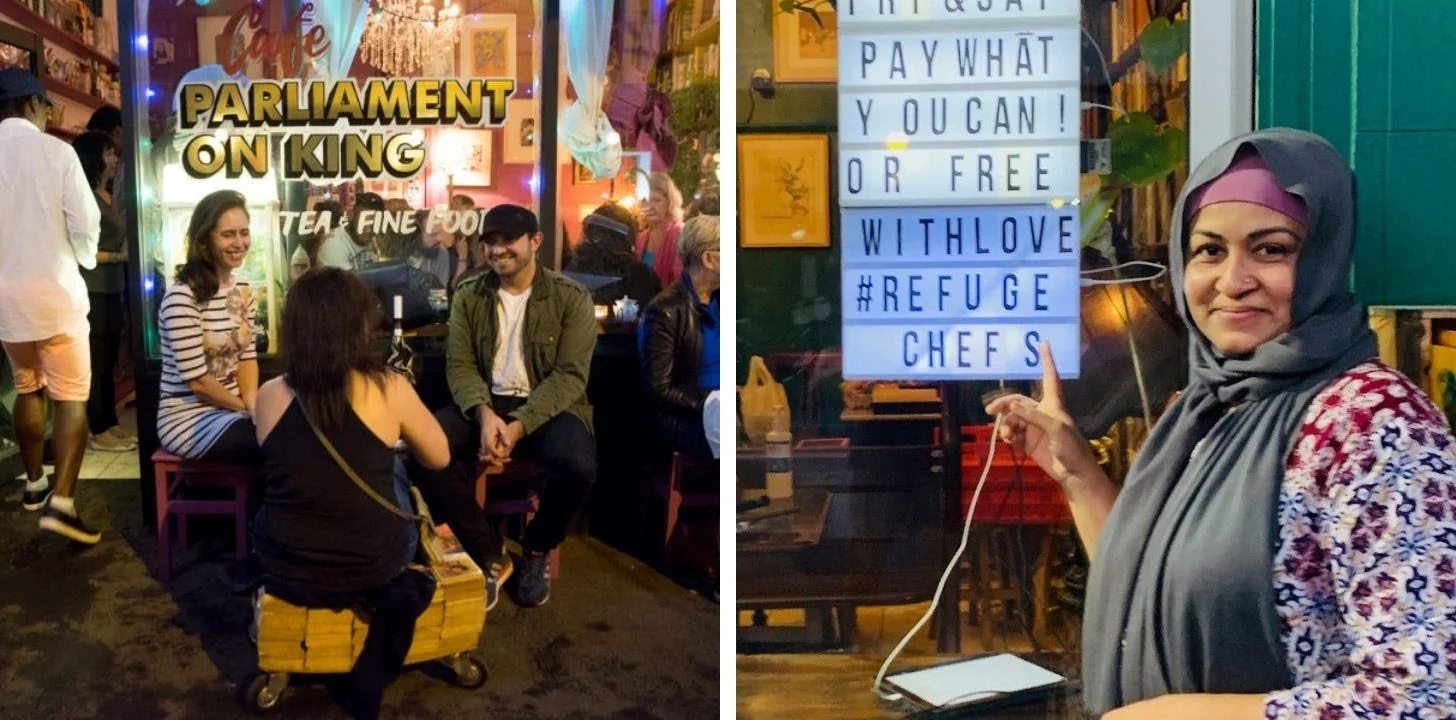
Like many small businesses, Parliament On King was rattled by the pandemic, but they took the opportunity to pivot with purpose. Foreseeing that food insecurity would escalate, Ravi and Della made the decision to make as many nourishing meals as they could afford to for those in need–and so their soup kitchen began.
Despite not operating as a business, they kept up the soup kitchen three nights a week, employing local refugees to cook and welcoming volunteers to support distribution. When they started to burn through their savings , the community showed up with solidarity in spades. Thanks to a crowd funder, a small grant and private donations, Parliament On King kept the kitchen alive – and to this day, it still serves the community every Saturday evening, with anywhere from 5-20 volunteers rocking up each week to help out.
“Everyone around us was like “we’ll help!” This literally only happened because of the community around this place. It’s very special.”
Small rituals, big ties
Ravi is, of course, humble about the impact he’s had on the community. Over the years, aside from the regular dinners, himself and Della have developed rituals like weekly life drawing classes, an intimate affair attracting non-artists and actual artists alike–sometimes so many they can barely fit in the space! But creativity isn’t limited in to their Thursday night; I’ve stopped by on a Sunday to see Ravi sketching away with a friend in the window-front, in amongst other customers.
They also previously have hosted speed dating and even had a “dating book” - polaroids taken of single cafe-goers or volunteers that people wrote testimonials about for other singletons to peruse, like an analog, community-driven dating app. Ravi even spoke of Parliament Babies that originated from connections developed in the space.
Some come to eat and drink, to come to work and make a living or find a moment of stillness.. Some to create, whilst others come to connect.
What is true to all of the goings – on in this unassuming spot on the softer side of King Street is that the small rituals create big ties to place, people and purpose, for people from all walks of life.
“So I think to myself, look, if I’ve done anything, any small thing – what I have done is simply created an opportunity for people to act upon the goodwill and love that’s in their hearts. Nothing bigger than that.”
💛 On being a good human
Finally, I asked Ravi what advice he would give to someone looking to make an everyday impact in their lives.
“Just do it – stop thinking about doing it. One person, one kind act at a time. The joy of being useful in the life of another person is immeasurable. Action creates its own momentum; that action is its own reward.”
How good.
👀 What can I do next?
Visit Parliament on King in Erskineville, Sydney to eat and drink (Saturdays and Sundays), draw (Thursday evenings), or volunteer (Saturday evenings)
Read Humankind: A Hopeful History by Rutger Bregman, which argues that humans are fundamentally kind and co-operative, and embracing this view can lead to a better society
Dine at social enterprise restaurants and cafes like Kolkata Social, Kyiv Social, Refettorio OzHarvest or Into Coffee – or express your interest in HFG’s new Good Talk lunches and dinners, to do so with other good humans